Piccarda Donati
Piccarda Donati is a Florentine noblewoman who appears in the third canto of Dante's Paradiso, in the sphere of the Moon, among souls whose religious vows were broken by force. She embodies the perfect contentment of the blessed with their allotted place in Heaven, and her serene explanation that 'in His will is our peace' articulates one of the poem's central theological principles.
Identity and Background
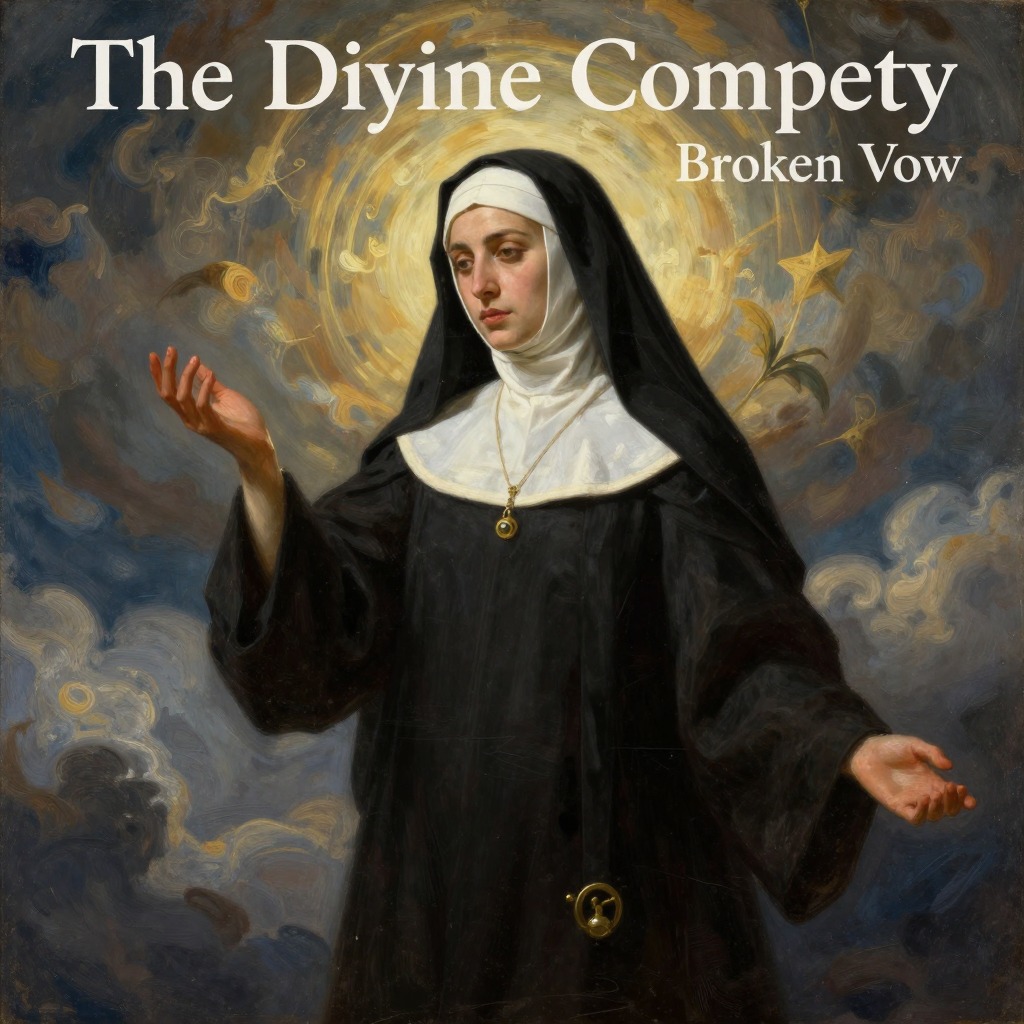
Piccarda was a member of the powerful Donati family of Florence. She became a nun in the Order of Saint Clare, taking the veil and pledging herself to the Franciscan rule. Her brother, Corso Donati, a leader of the Black Guelphs, forcibly removed her from the convent and compelled her into a marriage for political reasons. She was thus torn from the religious life she had chosen. In Paradise, she appears among the souls in the slowest sphere, the Moon, because their vows were 'neglected and in some part void' . She is accompanied by the Empress Constance, who suffered a similar fate.
Life and Plot Trajectory
Piccarda's earthly life was defined by the conflict between her own spiritual vocation and the violent political ambitions of her family. She fled the world in girlhood, entering the cloister to follow the rule of Saint Clare. However, 'men accustomed unto evil more than unto good, from the sweet cloister tore me' (E10158-10159). She was forced into a marriage, and her life thereafter was not of her own choosing. In the afterlife, she is not punished for this broken vow, but is placed in the lowest heaven, content with her station. When Dante asks if she desires a higher place, she explains that the will of the blessed is entirely conformed to God's will, and that 'his will is our peace' .
Key Actions and Objectives
Piccarda's primary action in the poem is to speak with Dante, revealing her identity and explaining the nature of her blessedness. She does not seek a higher sphere, for to do so would be to act against the divine will. Her objective is to instruct Dante in the nature of true charity, which makes the blessed 'wish alone for what we have, nor gives us thirst for more' (E10123-10124). She demonstrates that the hierarchy of Heaven is not a source of envy but of harmony, as all souls are united in their love for God.
Relationships and Conflict
Piccarda's central conflict was with her brother, Corso Donati, who tore her from the cloister. This conflict is not directly dramatized but is recounted as the defining trauma of her life. Her relationship with the Empress Constance, who shares her fate and her place in the Moon, is one of solidarity. In Paradise, her relationship with God is one of perfect submission and love. She also has a relationship with the rule of Saint Clare, to which she was faithful in spirit even after being forced to abandon it.
Change and Ending
Piccarda's story is one of a life interrupted and a will that remained steadfast despite external force. She did not change her inner devotion, even when her circumstances were violently altered. Her ending in the poem is a peaceful one: after speaking with Dante, she begins singing 'Ave Maria' and vanishes 'as through deep water something heavy' (E10174-10175). She returns to the eternal joy of her sphere, having fulfilled her role as a teacher and a witness to the peace that comes from accepting God's will.
Narrative Role and Evaluation
Piccarda serves as a crucial theological guide in the Paradiso, introducing the concept of the blessed soul's complete contentment with its place in the divine order. Her famous line, 'In His will is our peace' , is one of the most quoted and thematically central statements in the entire Comedy. She is a flat character in the sense that she is built around a single, defining idea—the perfect harmony of the will with God—but this idea is explored with profound depth and beauty. Her story also serves as a critique of the political violence and corruption that disrupted religious life in Dante's Florence.